Chemistry
Prepare for a Career in Science
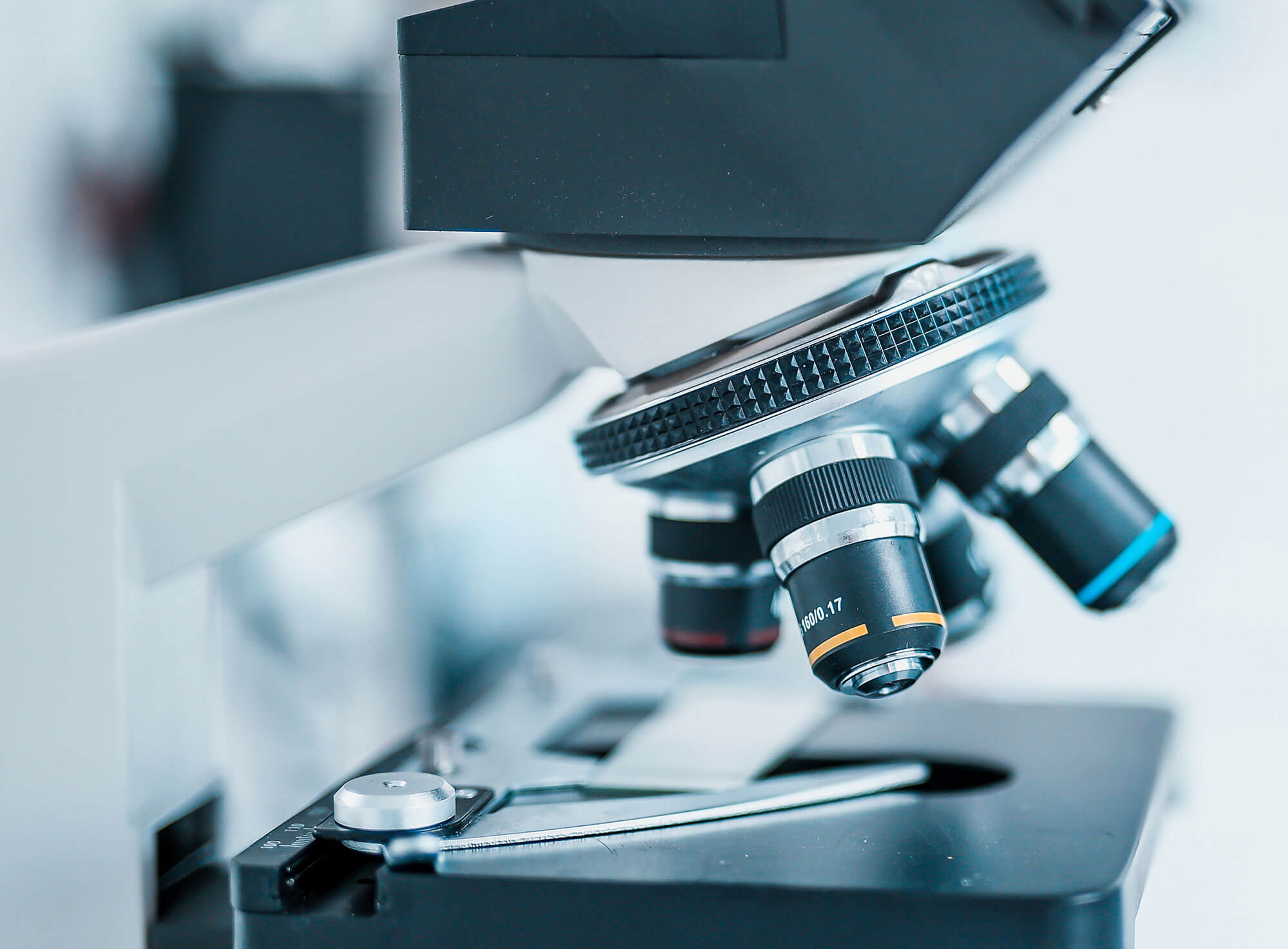
Research, teach, or go to medical school.
Chemistry is one of the most versatile fields of scientific study. Depending on your chosen specialization, the Chemistry program at Davis & Elkins College can prepare you for multiple career paths. You’ll build a strong base of knowledge and get hands-on experience conducting research and using chemistry-related tools and instruments. This rigorous scientific foundation can launch you toward a career in research, industry, medicine, or education.
The Chemistry program at D&E is housed within the Mathematics and Science Division in the Eshleman Science Center. Three teaching laboratories are available for courses in the major and undergraduate research, giving chemistry students hands-on experience with professional-grade instrumentation from their very first semester.
Baccalaureate Programs (B.S.)

Bachelor of Science in Chemistry — General Chemistry Program
The general chemistry program requires 40 credit hours of chemistry courses plus additional required courses in mathematics and physics.
Bachelor of Science in Chemistry — Pre-Medical Program
The pre-medical program requires 30–40 credit hours of chemistry courses plus specified courses in biology, mathematics, and physics. Pre-medical students must also check the specific entrance requirements for their intended professional schools.
Bachelor of Science in Chemistry — Secondary Education Program
The secondary education specialization prepares students for teaching secondary school chemistry. It combines the general chemistry curriculum with education coursework leading to initial teacher licensure.
Minors
Chemistry Minor
The requirements for a minor in chemistry consist of 18–20 credit hours of specified and elective chemistry courses.
Courses
What We Offer
- Basic Chemistry I & II
- Basic Chemistry I & II Laboratory
- Fundamentals of Chemistry I & II
- Chemical Laboratory Principles I & II
- Quantitative Analysis
- Quantitative Analysis Techniques
- Organic Chemistry I & II
- Organic Techniques I & II
- Environmental Chemistry
- Environmental Chemistry Techniques
- Physical Chemistry I & II
- Physical Chemistry I & II Laboratory
- Biochemistry
- Undergraduate Chemical Research
- Independent Study
- Instrumental Analysis
- Instrumental Analysis Techniques
- Inorganic Chemistry
- Seminar and Thesis
Facilities
In addition to three teaching laboratories, chemistry facilities include:
- Stock, prep, and balance rooms.
- An instrument room housing a PerkinElmer infra-red spectrophotometer, Nicolet infra-red spectrophotometer, Beckman UV/visible spectrophotometer, PerkinElmer Lambda 20 UV/visible spectrophotometer, Sargent heavy-duty electrolytic analyzer, Kreis polarimeter, PerkinElmer AutoSystem gas chromatograph, and Varian gas chromatograph.
- Additional available equipment includes spectroscopes, a Bausch and Lomb refractometer, Bausch and Lomb Spectronic 20 spectrophotometers, centrifuges, pH meters, and analytical balances
Research
The Chemistry program offers formal undergraduate research opportunities through the Undergraduate Chemical Research course, in which students pursue an independent research project under the direction of a chemistry faculty member. Projects focus on developing novel research that produces results suitable for presentation to the broader chemical community, including the synthesis of biologically active and scientifically interesting molecules.
Careers in Chemistry
The chemistry program can prepare you for careers in a wide array of fields, including:
Industry and Research
- Research Chemist (Pharmaceutical, Chemical, or Materials Company)
- Analytical Chemist
- Quality Control/Assurance Chemist
- Environmental Chemist
- Biochemist/Biotechnologist
- Graduate Study in Chemistry
- Biochemistry
- Chemical Engineering
Health and Medicine
- Medical School (M.D. or D.O.)
- Dental School (D.D.S. or D.M.D.)
- Pharmacy School (Pharm.D.)
- Optometry School (O.D.)
- Physician Assistant (M.S. or D.M.S.)
- Medical Research Scientist
Education
- Secondary School Chemistry Teacher (Chemistry secondary education program leads directly to WV teacher licensure)
- College/University Faculty (with graduate study)
- Science Education Curriculum Developer
Environmental and Government
- Environmental Compliance Specialist
- EPA/State Environmental Agency Chemist
- Forensic Chemist
- Government Research Scientist








Why Chemistry at D&E
Three available program tracks will prepare you for success, whether your path leads to graduate study, professional school, industry, or secondary teaching. Small class sizes enable engaging faculty members to enhance your learning experience by challenging and inspiring you and providing individualized attention.
Three fully equipped teaching laboratories and a professional-grade instrument room give you hands-on experience with the same tools used by chemists in industry, research, and graduate schools. D&E’s formal articulation agreements with the West Virginia School of Osteopathic Medicine and the Marshall University School of Pharmacy offer chemistry students direct, expedited pathways to medical and pharmacy school. Undergraduate research opportunities through the Undergraduate Chemical Research course allow you to pursue original, faculty-mentored research and present findings to the broader scientific community. The Chemistry Secondary Education program provides a clear, integrated pathway to initial teacher licensure in West Virginia.